Best Automatic Chicken Coop Doors 2026
Compare 6 of the best automatic chicken coop doors for 2026, from solar to battery models, with anti-pinch sensors, timers, and how to keep your flock safe at dusk.
An automatic coop door is one of the highest-value upgrades a backyard chicken keeper can make. It opens at dawn so your flock can get out and forage, and it closes after dusk once every bird has roosted, which means you never again have to rush home at sunset or worry that you forgot to shut the coop. Since a reliably closed door is the most important defense against nighttime predators, a good automatic opener pays for itself in peace of mind.
We compared popular automatic coop doors using manufacturer specifications, power sources, sensor types, build materials, and the recurring themes in verified owner reviews. We did not install every door ourselves. Instead we weighed the features that protect a flock: a reliable closing mechanism, an anti-pinch sensor for safety, weatherproofing, and power that suits a backyard coop. Below are six doors we recommend, a comparison table, and guidance for choosing and setting one up.
Best Automatic Chicken Coop Doors 2026

RUN-CHICKEN Door T50 Automatic Opener
Battery-powered, weatherproof aluminum door with a reliable track and a strong owner reputation.

nolonly Solar Auto Door with LCD Screen
Solar-powered opener with an LCD display, timer, and light sensor for hands-off operation.

NyPots Solar Door with Timer & Sensor
Solar opener with both timer and light-sensor modes for set-and-forget dawn and dusk cycles.

Budsom Aluminum Door, Anti-Pinch Sensor
Budget-friendly aluminum opener with an anti-pinch safety sensor to protect slow birds.

FarmLite Non-Battery Solar Coop Door
Solar-driven opener that runs without disposable batteries for low-maintenance, off-grid coops.
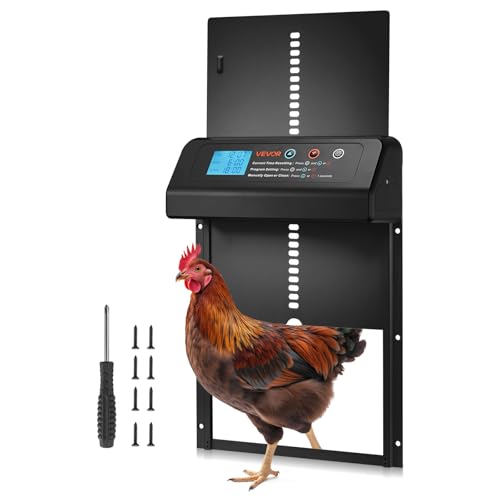
Affordable battery-powered door with a programmable timer and a manual switch for control.
How Do These Coop Doors Compare?
| Door | Price | Power | Trigger | Best For |
|---|---|---|---|---|
| RUN-CHICKEN T50 | $130 | Battery | Light + timer | Best overall reliability |
| nolonly Solar | $58 | Solar | Light + timer | Hands-off value pick |
| NyPots Solar | $60 | Solar | Light + timer | Off-grid coops |
| Budsom Aluminum | $42 | Battery | Timer/light | Budget with safety sensor |
| FarmLite Solar | $110 | Solar | Light sensor | No battery swaps |
| VEVOR Battery | $38 | Battery | Timer + manual | Cheapest entry point |
How We Picked These Doors
We did not install and run every door through a season. Instead we compared manufacturer specifications, power systems, sensor and trigger options, door materials, and the consistent patterns in verified owner reviews, then judged them against what keeps a flock safe and a keeper sane. We weighted four factors most heavily. First, reliable closing, since a door that jams or skips a night defeats the purpose. Second, safety, favoring anti-pinch or obstruction sensors that protect slow birds. Third, weatherproofing and a sturdy aluminum panel that resists jamming and prying. Fourth, sensible power for a backyard coop. Price and ease of programming rounded out the picture.
A Closer Look at Each Door
RUN-CHICKEN Door T50
Our top overall pick has earned a strong reputation among backyard keepers for simply working, night after night. The battery-powered, weatherproof aluminum door uses both light and timer triggers, and its vertical track is less prone to jamming than swinging designs. Battery life is long, and the closing action is firm but controlled. It costs more than budget openers, but the reliability and proven track record make it the safe choice for keepers who do not want to babysit their door. Keep spare batteries for winter.
Pros: Proven reliability, weatherproof aluminum, light and timer modes, long battery life.
Cons: Higher price; batteries drain faster in deep cold.
nolonly Solar Door with LCD Screen
For keepers who want hands-off operation at a fair price, this solar opener recharges itself and shows status on a clear LCD screen. You can run it on a light sensor, a timer, or both, then largely forget about it. The solar panel keeps the internal battery topped up as long as the coop gets daily sun. It is an excellent value pick, though as with all solar doors, confirm placement gets enough light and check the battery before the short days of winter.
Pros: Self-charging solar, easy LCD setup, timer and light modes, great value.
Cons: Needs daily sun; less daylight in winter strains the battery.
NyPots Solar Door with Timer and Sensor
This solar opener gives you both timer and light-sensor control, so you can match the door to your flock's rhythm and your local dusk. The self-charging panel suits coops set away from any outlet, and the dual triggers add flexibility if one mode does not fit your situation. It is a close sibling to other value solar doors, and a solid choice for off-grid setups. Place the panel where it catches sun and verify the closing time leaves no birds outside.
Pros: Dual timer and sensor modes, self-charging, good for off-grid coops.
Cons: Relies on sun exposure; verify the closing time during setup.
Budsom Aluminum Door with Anti-Pinch Sensor
If you want a real safety sensor without a premium price, this aluminum door delivers anti-pinch protection that stops the panel if a bird is in the way. The metal door resists prying better than plastic, and setup is straightforward with timer or light control. It is a strong budget pick for keepers who prioritize bird safety over fancy displays. Mount it tightly with no gaps, and like any battery model, plan to refresh the power periodically.
Pros: Anti-pinch safety, sturdy aluminum, low price, simple setup.
Cons: Fewer frills; battery model needs periodic power checks.
FarmLite Non-Battery Solar Door
For keepers tired of swapping batteries, this solar opener is designed to run without disposable cells, drawing its power from the sun. That makes it nearly maintenance-free for off-grid or remote coops, with light-sensor operation that follows natural daylight. The trade-off is a higher price and a stronger dependence on consistent sun. If your coop sits in an open, sunny spot, this is a tidy long-term, low-fuss solution that you can mostly install and forget.
Pros: No battery swaps, low maintenance, light-sensor operation, off-grid friendly.
Cons: Higher cost; very dependent on consistent daily sunlight.
VEVOR Battery Door with Timer
The most affordable opener here covers the essentials: a programmable timer, a manual switch for override, and battery power that works anywhere. It is a sensible entry point for keepers trying an automatic door for the first time without a big commitment. The feature set is basic and you will manage batteries, but it does the core job of opening and closing on schedule. Pair it with a watchful first week to confirm your flock is in before it closes.
Pros: Lowest price, timer plus manual control, works without sun or outlets.
Cons: Basic features; you manage batteries and verify timing yourself.
Getting the Most From an Automatic Coop Door
- Set the close after dusk. Schedule closing 20 to 30 minutes past sunset so every bird is roosted inside.
- Count heads at first. Watch a few closings during the first week until your flock learns the routine.
- Mount it gap-free. A door is only as secure as the coop wall around it; eliminate any predator gaps.
- Keep power ready. Stock spare batteries or confirm solar charging before winter's short days.
- Clear the track. Brush away ice, snow, and bedding so the panel never jams part way.
An automatic door dramatically improves flock safety, but it works best alongside a secure coop, a dig-proof apron, and a quick daily head count. If a bird is repeatedly left out, missing, or showing signs of injury or illness, check your setup and consult a poultry veterinarian or local extension office. This guide is educational and complements that everyday care.
Backyard Chicken Keepers Planner
Track your chicken's health, meds, vet visits, mobility, nutrition, and quality of life, all in one printable planner.
Related Chicken-Keeping Guides
Reviewed in detail
If you have narrowed the decision to one product, we go through it in detail here: Omlet Smart Automatic Coop Door review and ChickenGuard automatic coop door review.
Editor's Pick · Affiliate link
An Automatic Coop Door, the Upgrade Keepers Regret Waiting On
Nearly every predator loss happens because a door was open at dusk or dawn. An automatic opener closes on a light sensor or timer whether or not you are home, which is the single biggest reduction in risk available to a small flock.
Frequently Asked Questions
How do automatic chicken coop doors work?
An automatic door uses a small motor to raise and lower a sliding panel on a schedule. Most models trigger by a light sensor, a programmable timer, or both, opening at dawn so your birds can free-range and closing after dusk once they have roosted. Power comes from batteries, a built-in solar panel, or a plug-in adapter. The best units include an anti-pinch sensor that stops or reverses the door if a slow bird is in the way, which protects stragglers at closing time.
Are automatic coop doors safe for chickens?
Yes, when chosen and set up well. Look for a model with an obstruction or anti-pinch sensor that reverses if it meets resistance, and set the closing time a bit after full dusk so every bird is inside and on the roost. Train your flock to the door for a few evenings and count heads at first. Mount the door securely with no gaps a predator could exploit. Used correctly, an automatic door is safer than a manual one because it never gets forgotten on a late night.
Should I get a solar or battery powered coop door?
Solar doors recharge themselves and need almost no attention, which is ideal for coops far from an outlet, though they rely on enough daily sunlight and a working internal battery. Plain battery doors are simple and reliable but require you to swap or charge batteries every few months, more often in cold weather. Plug-in doors never run low but need a weatherproof power run to the coop. For most backyard keepers, a solar or quality battery model offers the best balance of convenience and reliability.
Will an automatic door keep predators out?
It helps a great deal by closing reliably every night, which is the single most important predator defense, but the door is only as secure as the coop around it. A sturdy aluminum door in a solid-walled, hardware-cloth-protected coop keeps out raccoons, foxes, and weasels. A flimsy door or one mounted on a gap-filled coop will not. Pair the door with secure walls, a dig-proof apron, and good latches on any other openings for full protection against determined nighttime predators.
What if a chicken is still outside when the door closes?
This is exactly why an anti-pinch sensor matters: a good door stops or reverses if it touches a bird. To avoid the situation entirely, set the closing time 20 to 30 minutes after sunset, since chickens naturally head to roost at dusk and a late close gives stragglers time to settle. For the first week, watch a few closings and count heads. Broody hens or birds hiding outside the coop may need a gentle nudge inside until the flock learns the routine.
Do automatic coop doors work in winter?
Yes, but cold weather is harder on them. Batteries drain faster in freezing temperatures, so check power more often and keep spares on hand. Choose a model rated for low temperatures, and use a vertical-track aluminum door, which is less likely to jam than a swinging design. Clear ice, snow, and bedding from the track so nothing blocks the panel. Solar units still charge in winter but get less daylight, so confirm the internal battery holds enough to run through long, dark nights.
Need more help with your flock?
Browse our guides by topic to find practical solutions.
Wellness Planner: $39