How Much to Feed Chickens: Daily Amounts
How much to feed chickens: daily feed amounts per hen, free-feeding vs scheduled meals, winter increases, flock planning figures, and how to read body condition.
One of the first questions new keepers ask is how much to feed their chickens. The reassuring answer is that you do not need to measure every gram. Chickens on a complete feed are good at self-regulating, so the simplest approach is to keep good feed available and let birds eat to their needs. Still, it helps to know the rough amounts, how appetite changes with the seasons, and how to read your flock so you can feed well and avoid waste.
Below are feeders and feed that make daily feeding easy, from large-capacity hoppers to a complete layer ration. A good feeder reduces waste, which matters more to your feed bill than rationing.
Feeding Made Easy
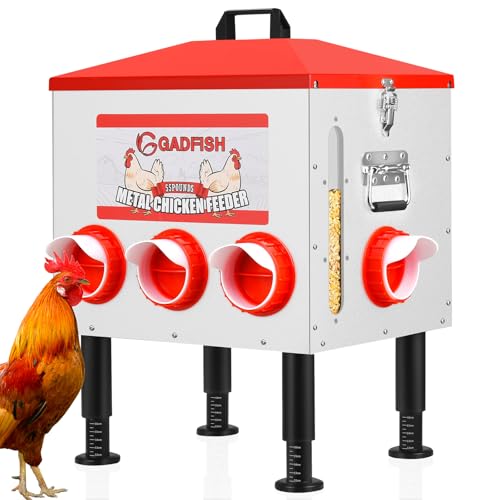
GADFISH Automatic Chicken Feeder, 55 lb, 8 Ports
Large-capacity hopper for free-feeding without daily refills

Manna Pro Layer Pellets, 16% Protein
Complete daily ration to keep available for laying hens

Omlet No Waste Chicken Feeder, 12 lb
Anti-spill ports cut waste, feeds 6 hens for a week

Manna Pro Chicken Grit with Probiotics
Keep grit available so birds digest feed and forage
The Quarter-Pound Rule of Thumb
A standard laying hen eats roughly a quarter pound of complete feed per day, about half a cup. That is the number to plan around, but treat it as an average rather than a hard limit. Larger heavy breeds eat more, bantams eat less, and every bird's appetite shifts with the weather and her laying. Rather than rationing precisely, most keepers keep feed available and let the flock take what it needs, using the quarter-pound figure mainly for planning how much feed to buy.
Free-Feeding vs Scheduled Meals
There are two common approaches. Free-feeding keeps complete feed available all day, which suits laying hens that benefit from steady access and self-regulate well. Scheduled feeding offers feed at set times, usually morning and afternoon, which gives more control over intake and waste but requires you to be present. Both work fine. If you free-feed, secure or remove the feeder at night to deter rats and mice, which are drawn to standing feed. Laying hens should never go long stretches without feed.
Flock Planning at a Glance
| Flock size | Per day | Per week | 50 lb bag lasts |
|---|---|---|---|
| 3 hens | ~0.75 lb | ~5 lb | ~10 weeks |
| 6 hens | ~1.5 lb | ~10 lb | ~5 weeks |
| 12 hens | ~3 lb | ~21 lb | ~2.5 weeks |
These are planning figures for mild weather. Expect more in winter and less when birds free-range in summer. Buy bag sizes you will use within a month or two so the feed stays fresh, since vitamins degrade over time. Storage in a dry, rodent-proof container keeps the whole bag usable.
Seasonal Swings in Appetite
Chickens eat noticeably more in cold weather, often 10 to 20 percent more, because they burn energy to stay warm. Winter is the wrong time to ration tightly, so keep feed freely available and consider a small evening scoop of scratch to help birds generate overnight body heat. In summer, appetite drops in heat, and free-ranging birds lean more on forage. Adjust your expectations with the seasons rather than feeding a fixed amount year-round.
Backyard Chicken Keepers Planner
Track your chicken's health, meds, vet visits, mobility, nutrition, and quality of life, all in one printable planner.
The Real Cost Lever: Waste, Not Rationing
Many keepers try to save money by rationing feed, but the bigger lever is reducing waste. Birds billing feed onto the ground, rain spoiling open feeders, and rodents raiding at night waste far more than careful portioning ever saves, and under-feeding layers just costs you eggs. A good no-waste feeder with anti-spill ports, kept off the ground and protected from weather, pays for itself. Feed the flock freely and put your effort into keeping that feed in the feeder.
Reading Your Birds
The best feeding gauge is the flock itself. Healthy, well-fed hens are active and alert, lay well, and have full but not bulging crops at day's end and good body condition under the feathers. Underfeeding shows up as weight loss, dropping production, and birds fighting at the feeder. Overdoing treats shows up as heavy hens and fewer eggs. Watch body condition, keep treats and scratch under 10 percent, and adjust feed access based on what you see, remembering that appetite naturally rises in cold weather, laying, and molt.
Feeding Amount Quick Links
- 55 lb Automatic Feeder - free-feed without daily refills
- Omlet No Waste Feeder - cut feed waste
- Browse chicken feeders on Amazon
The Bottom Line
Plan on about a quarter pound of complete feed per laying hen per day, but feed by access rather than by the gram: keep good feed available, let birds self-regulate, and watch body condition and egg output as your feedback. Expect appetite to rise in winter and during laying and molt, keep treats under 10 percent, and focus your savings effort on cutting waste rather than rationing. Do that and your flock stays well-fed, productive, and healthy year-round. For the full diet picture, see what to feed chickens.
Editor's Pick · Affiliate link
An Automatic Coop Door, the Upgrade Keepers Regret Waiting On
Nearly every predator loss happens because a door was open at dusk or dawn. An automatic opener closes on a light sensor or timer whether or not you are home, which is the single biggest reduction in risk available to a small flock.
Frequently Asked Questions
How much feed does a chicken eat per day?
A standard laying hen eats roughly a quarter pound of feed per day, about half a cup, though this varies with breed, weather, and laying intensity. Larger heavy breeds eat more, while bantams eat noticeably less. Appetite climbs in cold weather as birds burn energy to stay warm and during heavy laying. The simplest way to feed is to keep complete feed available all day so each bird can eat to its own needs rather than trying to ration exact amounts.
Should I free-feed or use scheduled meals?
Most backyard keepers free-feed, keeping complete feed available all day so birds eat to their needs, which suits laying hens that benefit from steady access. Some keepers prefer scheduled meals to control intake or reduce waste and rodents, offering feed in the morning and afternoon. Both work. If you free-feed, secure or remove feed at night to deter rats and mice. The key is that laying hens should never go long stretches hungry, since that quickly reduces egg production.
How much do chickens eat in winter?
Chickens eat more in winter, often noticeably more, because they burn extra energy to stay warm. Cold birds may eat 10 to 20 percent more feed than in mild weather. Keep complete feed freely available through the cold months, and a small evening scoop of scratch can help generate body heat overnight. Make sure water never freezes, since birds will not eat well if they cannot drink. Winter is the wrong time to ration feed tightly.
Can chickens overeat or get fat?
Chickens on complete feed generally self-regulate well and rarely overeat the balanced ration itself. The bigger risk is too many treats and too much scratch, which are energy-dense and can lead to overweight, underproductive hens and even fatty liver problems. This is why treats and scratch should stay under 10 percent of the diet. Let birds free-feed on complete feed, but keep a tight rein on the snacks. Watch body condition and trim treats if hens are getting heavy.
How do I know if I am feeding enough?
Watch your birds rather than just the scale. Hens should be active, alert, and laying well, with full but not bulging crops at the end of the day and good body condition under the feathers. Signs of underfeeding include weight loss, dropping egg production, and aggressive competition at the feeder. Signs of overfeeding treats include heavy birds and fewer eggs. Adjust based on what you see, and remember appetite naturally rises in cold weather and during laying and molt.
How much feed for a flock of chickens?
As a planning figure, budget about a quarter pound of feed per laying hen per day, so a flock of six hens eats roughly a pound and a half daily, or about 10 pounds a week. A 50-pound bag of layer feed lasts that flock around five weeks, less in winter and when forage is scarce, more when birds free-range in summer. Buy bag sizes you will use within a month or two so the feed stays fresh and the vitamins do not degrade.
Does free-ranging change how much I should feed?
Free-ranging birds eat less purchased feed when forage is plentiful in spring and summer, and more when it is scarce in winter, so their feed intake naturally rises and falls with the seasons. Keep complete feed available regardless, since forage cannot reliably supply balanced nutrition for laying hens. Birds self-regulate, taking what they need from the feeder to fill the gaps in their foraged diet. Do not cut feed just because birds are ranging, especially for layers.
Need more help with your flock?
Browse our guides by topic to find practical solutions.
Wellness Planner: $39