Chicken Coop Size Requirements: How Much Space Per Bird
How big should your chicken coop be? Learn the space-per-bird rules for the coop, run, roosts, and nesting boxes, why bigger is better, and how to avoid overcrowding.
If there is one number that makes or breaks a backyard flock, it is space. Get the dimensions right and your birds are calm, healthy, and easy to manage. Get them wrong and you invite pecking, feather picking, stress, and disease, problems that no feed or treatment fully fixes until the crowding is solved. This guide lays out exactly how much room chickens need, from the coop floor to the run, the roosts, and the nesting boxes, and explains why building bigger than the minimum is one of the smartest decisions you can make.
Roomy Housing Options
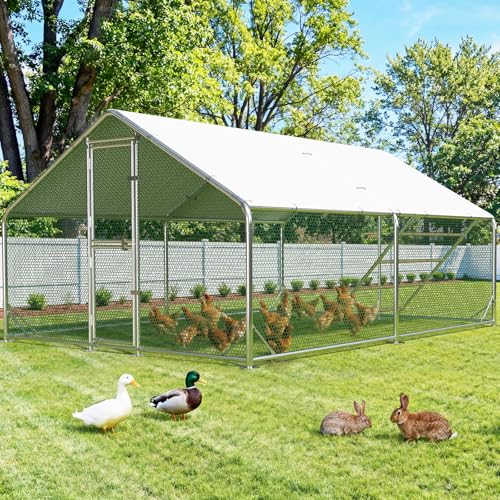
Sannwsg Metal Walk-in Chicken Coop, 13x10 ft
A large galvanized walk-in run with space for a sizable flock to roam.

LEVELEVE Large Walk-in Chicken Coop with Run
Stand-up walk-in design that gives birds generous indoor and run space.
The Core Rule: 4 Square Feet Inside, 8 to 10 Outside
The foundational guideline that experienced keepers and poultry-extension resources rely on is simple: provide at least 4 square feet of indoor coop floor space per standard-sized bird, plus 8 to 10 square feet per bird in the run. So a flock of six standard hens needs roughly 24 square feet inside and 48 to 60 square feet of run. These figures assume birds also get time outdoors. If your flock is confined to the coop and run most of the time, lean toward the higher end or beyond, because birds that cannot range need more room to stay content.
Remember these are minimums, not goals. Few keepers ever regret building too big, while crowding is the most common regret of all.
A Quick Size Reference
Here is how the standard guidelines translate into flock sizes for standard breeds:
| Flock size | Minimum coop (4 sq ft/bird) | Minimum run (8-10 sq ft/bird) |
|---|---|---|
| 3 hens | 12 sq ft | 24-30 sq ft |
| 4 hens | 16 sq ft | 32-40 sq ft |
| 6 hens | 24 sq ft | 48-60 sq ft |
| 8 hens | 32 sq ft | 64-80 sq ft |
| 10 hens | 40 sq ft | 80-100 sq ft |
Bantams can manage with somewhat less, around 2 to 3 square feet of coop space each, while large or heavy breeds appreciate more than the standard. Adjust up for confined flocks.
Why Manufacturer Capacity Claims Mislead
If you buy a prefab coop, be skeptical of the advertised bird count. Capacity claims are routinely optimistic, because bigger numbers help sell coops. A coop marketed for eight chickens often provides closer to the right space for four or five at the standard 4 square feet each. Do not trust the headline number. Instead, find the actual interior floor dimensions, calculate the square footage yourself, and divide by 4 for standard birds. That gives you the honest capacity, which is frequently about half of what the box claims.
Backyard Chicken Keepers Planner
Track your chicken's health, meds, vet visits, mobility, nutrition, and quality of life, all in one printable planner.
The Real Cost of Overcrowding
Crowding is not a minor inconvenience. It is the root cause of a remarkable share of the problems new keepers face. When birds are packed too tightly, they cannot escape each other, and the pecking order turns nasty. Feather picking, bullying, and even cannibalism become common. Stress suppresses laying and weakens the immune system, while parasites and disease spread quickly through close-packed birds and damp, fouled bedding. If your flock is squabbling, picking feathers, or laying poorly, the first thing to check is whether they simply have enough space.
Roost Space: Room for Every Bird
Chickens instinctively sleep up off the floor, so roosting bars are essential, and every bird needs a spot. Allow about 8 to 12 inches of roost length per standard chicken, enough that the whole flock can perch at once without squabbling. The ideal roost is a flat 2-by-4 mounted with the wide side facing up, which lets birds settle down over their feet and protect their toes from frostbite in winter. Place roosts higher than the nesting boxes, so birds prefer to sleep on the bars rather than soiling the boxes.
Nesting Boxes: One Per Three to Four Hens
Nesting boxes are where the magic happens, and you need fewer than you might think. About one box for every three to four hens is plenty, because hens tend to share favorites and will even queue for a preferred box. Each box should be roughly 12 inches square for standard breeds, placed lower than the roosts, and kept filled with clean, soft bedding. Too few boxes causes crowding, broken eggs, and egg eating, while clean, well-placed boxes encourage hens to lay where you want them to.
When in Doubt, Build Bigger
The single best piece of advice on coop size is to exceed the minimums. Flocks have a way of growing, birds spend more time confined in bad weather, and a little extra room buys you calmer, healthier chickens and easier management. A coop and run sized generously today saves you from a rebuild tomorrow. Measure your space, decide your flock size, apply the 4-square-foot and 8-to-10-square-foot rules with a comfortable margin, and give your birds the room they need to thrive.
Editor's Pick · Affiliate link
An Automatic Coop Door, the Upgrade Keepers Regret Waiting On
Nearly every predator loss happens because a door was open at dusk or dawn. An automatic opener closes on a light sensor or timer whether or not you are home, which is the single biggest reduction in risk available to a small flock.
Frequently Asked Questions
How much coop space does a chicken need?
Plan for at least 4 square feet of indoor floor space per standard-sized chicken, plus 8 to 10 square feet per bird in the run. Bantams can manage with a little less, while large or heavy breeds and confined flocks need more. These are minimums, not targets, so building larger than the rule almost always pays off in calmer, healthier birds.
Why do manufacturers overstate coop capacity?
Prefab coop capacity claims are notoriously optimistic because larger numbers sell better. A coop advertised for eight birds may truly suit four or five at the standard 4 square feet each. Always calculate the real floor area yourself, divide by 4, and treat the manufacturer's bird count as a best-case figure rather than a reliable guide.
How much run space do chickens need?
Allow 8 to 10 square feet per bird in the run, and more if the birds spend most of their time there rather than free-ranging. A generous run reduces boredom, pecking, and muddy, overused ground. If your run is on the small side, supervised free-ranging or a larger covered run can make up the difference and keep birds content.
What happens if a coop is too small?
Overcrowding is the leading cause of flock problems. Cramped birds peck and pick each other's feathers, fight over the pecking order, and become stressed, which suppresses laying and immunity. Disease and parasites also spread far faster in tight quarters. Most behavior and health issues new keepers face trace back to simply not having enough space.
How much roost space does each chicken need?
Provide about 8 to 12 inches of roosting bar per standard bird, enough that every chicken can perch at once, since they all roost at night. Use a flat 2-by-4 with the wide side up so birds can cover their feet in cold weather. Place roosts higher than the nesting boxes so birds prefer to sleep on the bars.
How many nesting boxes do I need?
Roughly one nesting box for every three to four hens. Hens often share favorite boxes and queue for them, so you do not need one per bird. Too few boxes leads to crowding, broken eggs, and egg eating. Place boxes lower than the roosts and keep them filled with clean, soft bedding to encourage laying there.
Do bantams need less space than standard chickens?
Yes, somewhat. Bantams are smaller and can manage with a bit less floor and roost space than standard breeds, but they still need room to move, roost, and avoid crowding. Do not pack them in just because they are small. A good rule is to give bantams around 2 to 3 square feet of indoor space each, with proportionally generous run space.
Need more help with your flock?
Browse our guides by topic to find practical solutions.
Wellness Planner: $39